
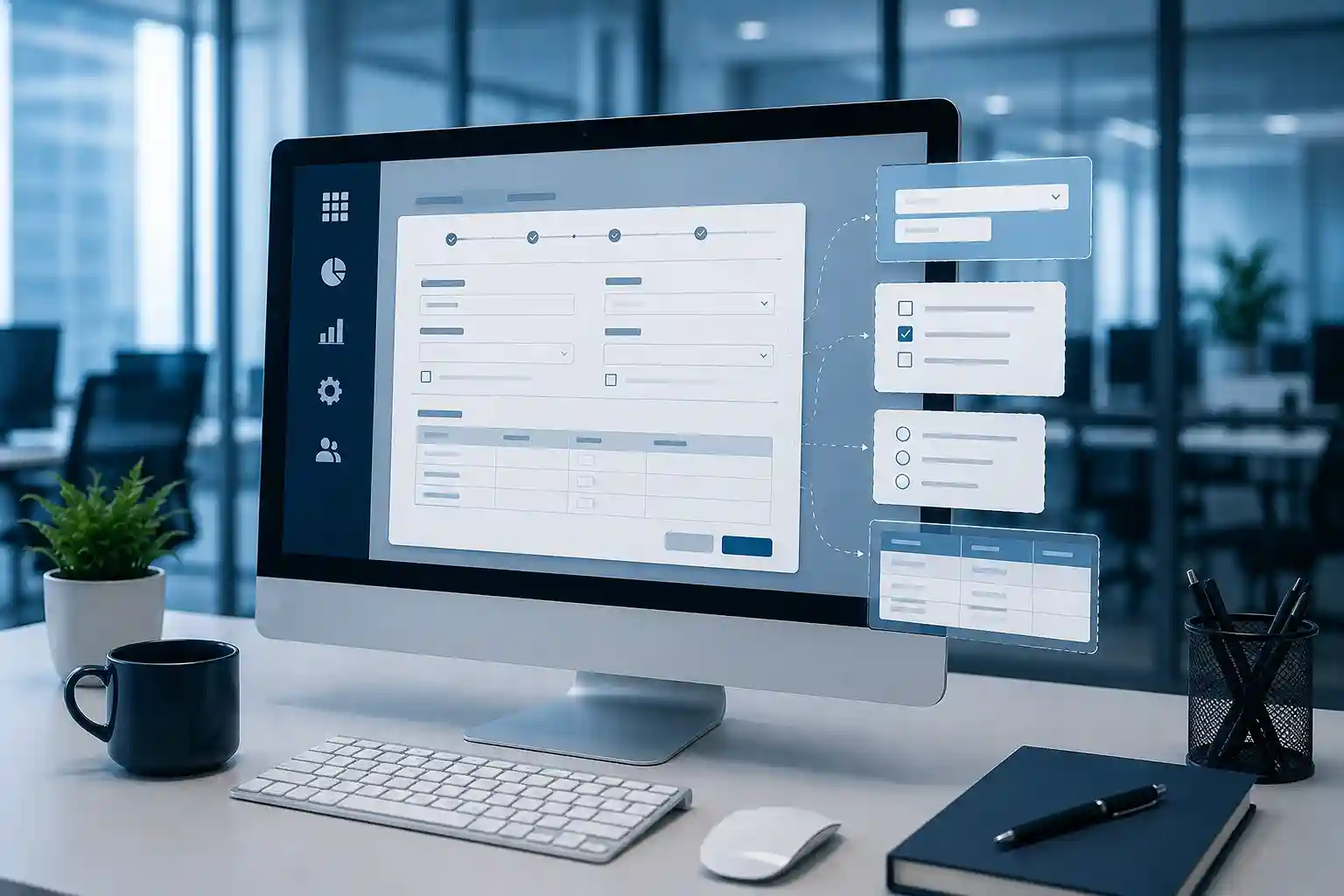
ERP systems are designed to standardize business operations, but every organization has different workflows, documents, approval processes, and reporting requirements. ERP Form Customization allows businesses to modify invoices, purchase orders, sales orders, delivery notes, quotation forms, employee forms, and other ERP documents according to their operational needs. With professional ERP customization services from CubeZix, businesses can create forms that capture the right information, follow internal processes, and present business data clearly without relying on disconnected manual templates.
What Is ERP Form Customization?
ERP Form Customization is the process of modifying the layout, fields, design, data, and workflow-related elements of standard ERP forms to match a company’s specific business requirements.
Standard ERP software typically includes predefined forms for common transactions. However, businesses may need additional fields, approval details, company-specific information, tax information, signatures, terms and conditions, or customized document layouts.
For example, a trading company may require a sales invoice to display additional product, delivery, customer, or payment information. A construction company may need purchase orders with project codes, site information, approval details, and cost-center references.
Instead of changing business processes to fit a standard template, customized ERP forms can help the ERP support the way the business actually operates.
Why Do Businesses Need Customized ERP Forms?
ERP forms are used throughout everyday business operations. When these forms do not capture the required information, employees often create spreadsheets, Word documents, or separate templates to fill the gaps.
This can result in:
- Duplicate data entry
- Inconsistent business documents
- Manual errors
- Delayed approvals
- Poor document tracking
- Incorrect customer information
- Difficulties maintaining brand consistency
- Increased administrative workload
Customized ERP forms reduce these problems by bringing required information and document generation into the ERP environment.
For Dubai businesses managing multiple departments, branches, suppliers, customers, or projects, having standardized and customized forms can also improve operational consistency.
What Can Be Customized in an ERP Form?
ERP form customization can involve much more than changing a document’s appearance. Depending on the ERP platform and business requirements, organizations can customize several components.
Custom Fields and Business Information
Additional fields can be added to capture information that is not available in the standard ERP form.
Examples include:
- Project numbers
- Customer reference numbers
- Department codes
- Salesperson information
- Delivery details
- Cost centers
- Approval status
- Internal remarks
- Contract references
This allows employees to capture important information directly within the ERP workflow.
Invoice and Sales Document Customization
Businesses can customize invoices, quotations, sales orders, and delivery notes to reflect their commercial processes.
Customized invoice forms may include company details, tax information, payment terms, customer references, item details, discounts, and authorized signatures.
Purchase Order Form Customization
Procurement teams may require additional information such as supplier references, project codes, purchasing approvals, delivery requirements, or department information.
A customized purchase order template can bring these details into one standardized document.
Approval and Signature Sections
ERP forms can also include approval-related information where supported by the ERP platform.
For example, a purchase order may display:
Prepared By → Reviewed By → Approved By
This can make internal authorization processes easier to track and document.
ERP Form Customization vs Standard ERP Forms
Standard ERP forms are designed for general business requirements. They can work well when a company’s processes closely match the ERP’s default configuration.
However, businesses often have requirements that are specific to their industry or internal workflows.
| Standard ERP Forms | Customized ERP Forms |
|---|---|
| Predefined layouts | Business-specific layouts |
| Standard fields | Additional required fields |
| Generic document structure | Customized workflow information |
| Limited formatting options | Brand-specific presentation |
| Designed for broad use | Designed around business processes |
The purpose of ERP form customization is not simply to make documents look different. It is to make ERP-generated documents more useful, accurate, and aligned with business operations.
Benefits of ERP Document Customization
1. Better Data Accuracy
When the required fields are available within the ERP form, employees do not need to maintain separate documents to capture missing information.
2. Consistent Business Documentation
Customized forms help businesses maintain consistent formatting across quotations, invoices, purchase orders, delivery notes, and other documents.
3. Improved Operational Efficiency
Employees can generate business documents directly from the ERP instead of manually recreating information in external templates.
4. Stronger Brand Presentation
ERP-generated documents can be aligned with company branding, including logos, business information, formatting, and document structure.
5. Better Process Visibility
Including relevant approval, project, department, or transaction information can make documents easier for teams to review and process.
ERP Form Customization for Different Industries
Different industries have different documentation requirements, which makes form customization particularly valuable.
Trading and Distribution
Customized forms can include product references, delivery information, customer purchase orders, sales representative details, and payment terms.
Construction and Engineering
Businesses can incorporate project numbers, site details, cost codes, approval information, and project-related references into ERP documents.
Manufacturing
Manufacturers may require production references, batch information, material details, warehouse information, or other operational data.
Retail and E-commerce
Retail businesses may need customized invoices, order documents, delivery information, customer references, and payment details.
The right customization depends on the company’s workflow, ERP platform, industry, and reporting requirements.
How Does ERP Form Customization Work?
A structured ERP customization process usually begins with understanding the company’s existing forms and identifying gaps in the standard ERP templates.
The process can include:
- Requirement analysis – Identify the documents and information that need customization.
- Process mapping – Understand how each form is created, reviewed, approved, and used.
- Form design – Define the required fields, layout, branding, and document structure.
- ERP customization – Configure or develop the required form changes.
- Testing – Verify data accuracy, formatting, calculations, and document output.
- User validation – Allow relevant departments to review the customized forms.
- Deployment and support – Implement the approved forms and provide ongoing assistance.
This approach helps ensure that customization solves an actual business requirement rather than adding unnecessary complexity.
How CubeZix Helps With ERP Form Customization
CubeZix provides customized ERP solutions in Dubai designed around the operational requirements of businesses. Instead of expecting organizations to completely change their processes to match standard ERP functionality, CubeZix can identify where customization can improve workflows and document management.
ERP form customization can be considered as part of a broader ERP strategy involving customized workflows, modules, reports, dashboards, integrations, and business-specific processes.
The objective is to create an ERP environment that supports how your organization actually works.
Conclusion
ERP Form Customization helps businesses adapt ERP-generated documents to their actual workflows, data requirements, approval processes, and industry needs. From customized invoices and purchase orders to quotations, delivery notes, approval forms, and business-specific documents, the right customization can reduce manual work and improve consistency.
If your existing ERP forms do not capture the information your teams need, CubeZix can help evaluate the gaps and develop a practical customization approach. With custom ERP software in Dubai solutions tailored to your business processes, CubeZix helps organizations build ERP systems that are more aligned with their operational and long-term business requirements.